Resources
GNSS resilience, anti-jamming & anti-spoofing insights for defense, aviation, and critical infrastructure.
Browse by topic
Guides & Fundamentals
Start here — the core explainers our readers keep coming back to.
-

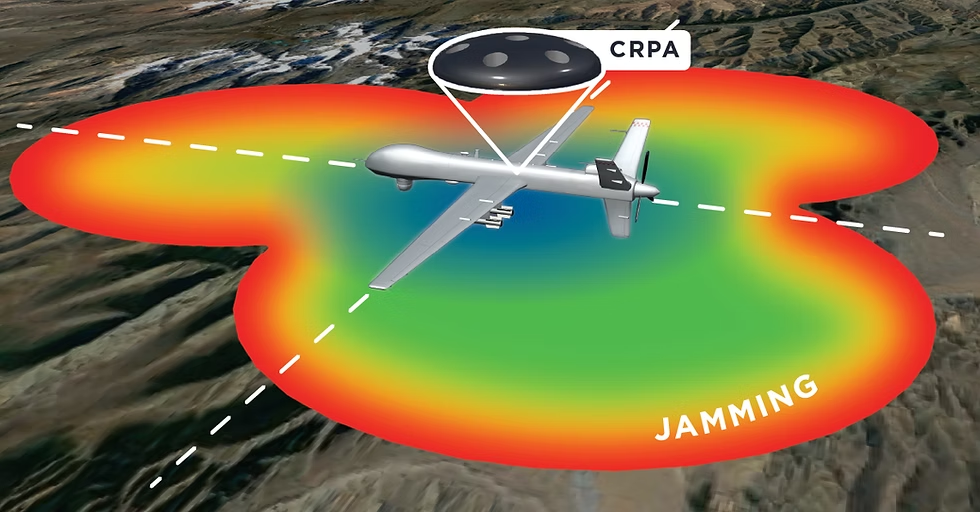
What Is a CRPA Antenna? (vs Regular GPS Antenna)
Read More: What Is a CRPA Antenna? (vs Regular GPS Antenna)A CRPA antenna uses adaptive nulling to defeat GNSS jamming. Learn what a CRPA is, how it works, how it differs from a regular GPS antenna, what it cannot do, and which element count fits…
-

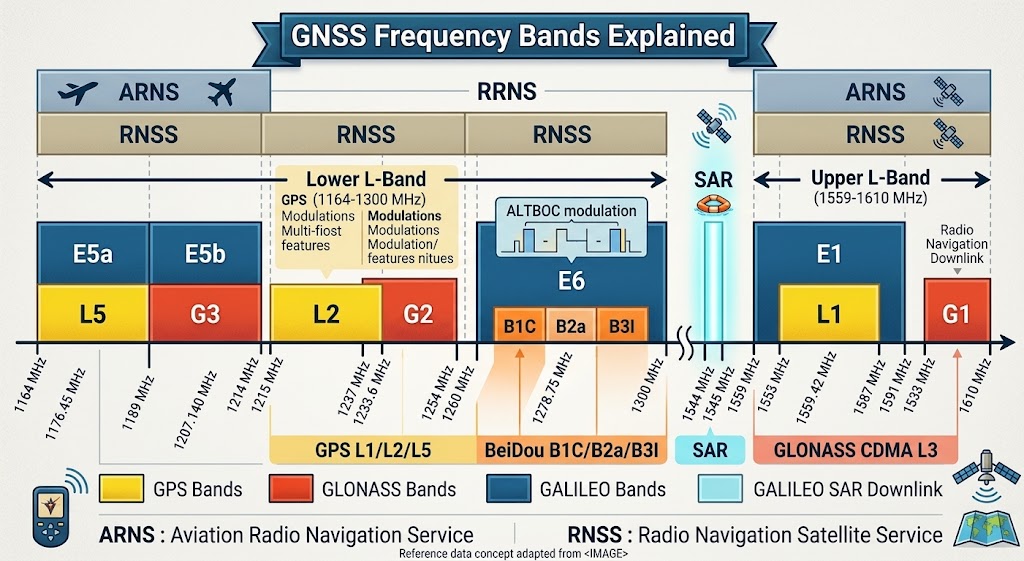
GNSS Frequency Bands Explained: GPS L1/L2/L5, Galileo E5a/E5b, BeiDou B1C/B2a/B3I & GLONASS CDMA L3
Read More: GNSS Frequency Bands Explained: GPS L1/L2/L5, Galileo E5a/E5b, BeiDou B1C/B2a/B3I & GLONASS CDMA L3GNSS frequency bands explained for antenna selection: GPS L1/L2/L5, Galileo E5a/E5b, BeiDou B1C/B2a/B3I, GLONASS CDMA L3. Why multi-band CRPA nulling beats frequency diversity under jamming.
-

How Does GNSS Anti-Jamming Work?
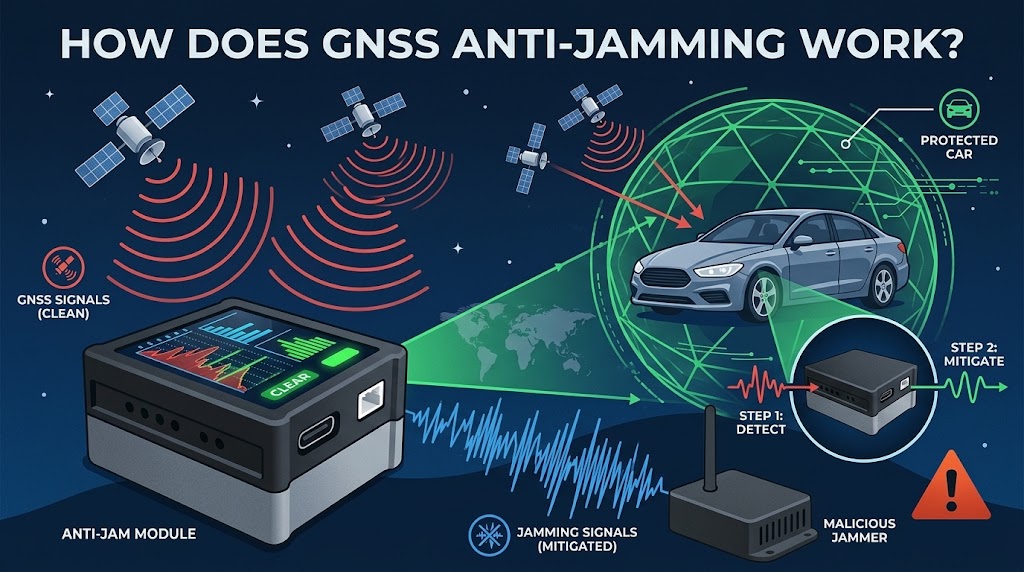
Read More: How Does GNSS Anti-Jamming Work?GNSS anti-jamming techniques explained: adaptive nulling, filtering, multi-constellation diversity, and anti-spoofing cross-checks for resilient PNT, plus how they combine in a receiver chain.
Latest Articles
New analysis, product notes, and field reports — published as they land.
-

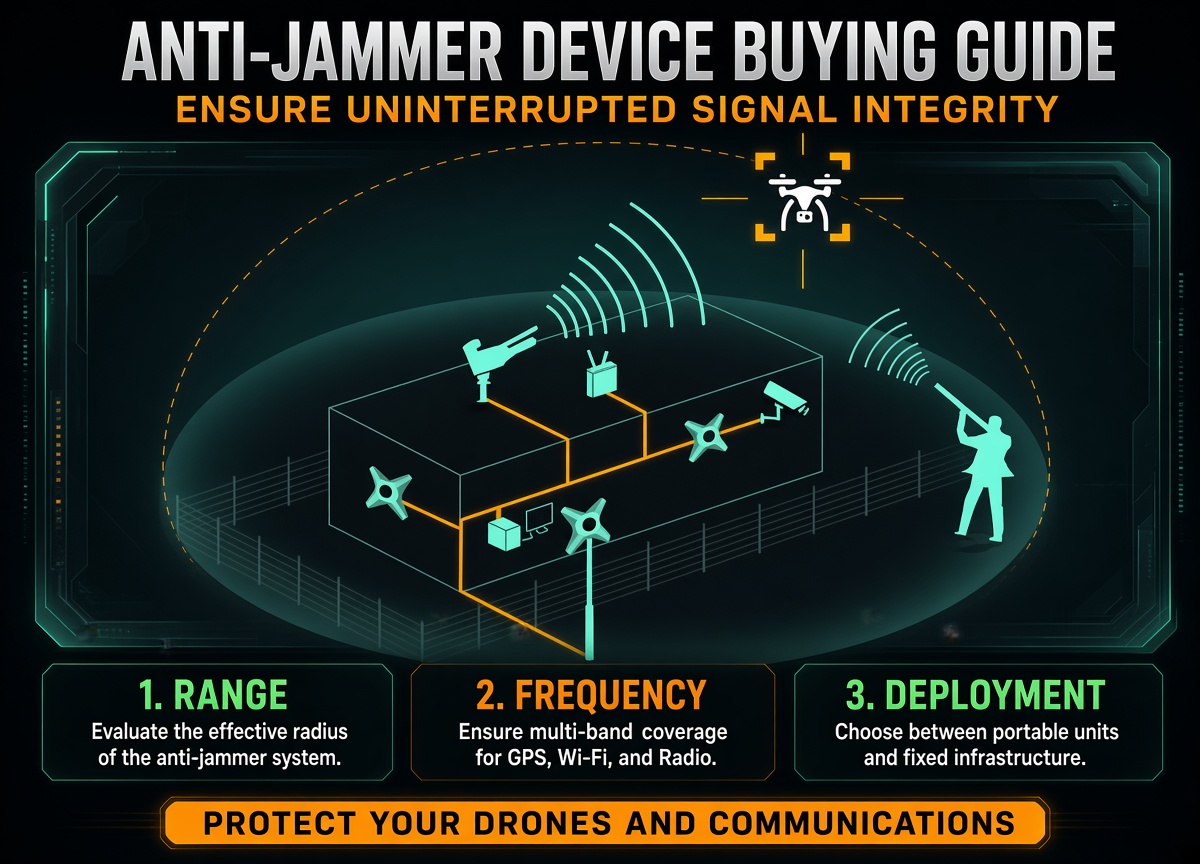
Anti-Jammer Device Buying Guide: What to Look For in 2026
Read More: Anti-Jammer Device Buying Guide: What to Look For in 2026Buying an anti-jammer / GNSS protection device? Compare CRPA arrays, nulling depth, response time, bands, weight and certification before you choose.
-

Anti-Jamming Technology Explained: How GNSS Resists Interference
Read More: Anti-Jamming Technology Explained: How GNSS Resists InterferenceAnti-jamming protects GNSS from interference using adaptive nulling, CRPA arrays, and filtering. Learn the techniques, the J/S math, and which solution fits your platform.
-

What Is GNSS? Global Navigation Satellite Systems Explained
Read More: What Is GNSS? Global Navigation Satellite Systems ExplainedGNSS (Global Navigation Satellite Systems) is the umbrella of satellite constellations that provide global positioning. Learn how GPS, GLONASS, Galileo and BeiDou work together for resilient PNT.
-

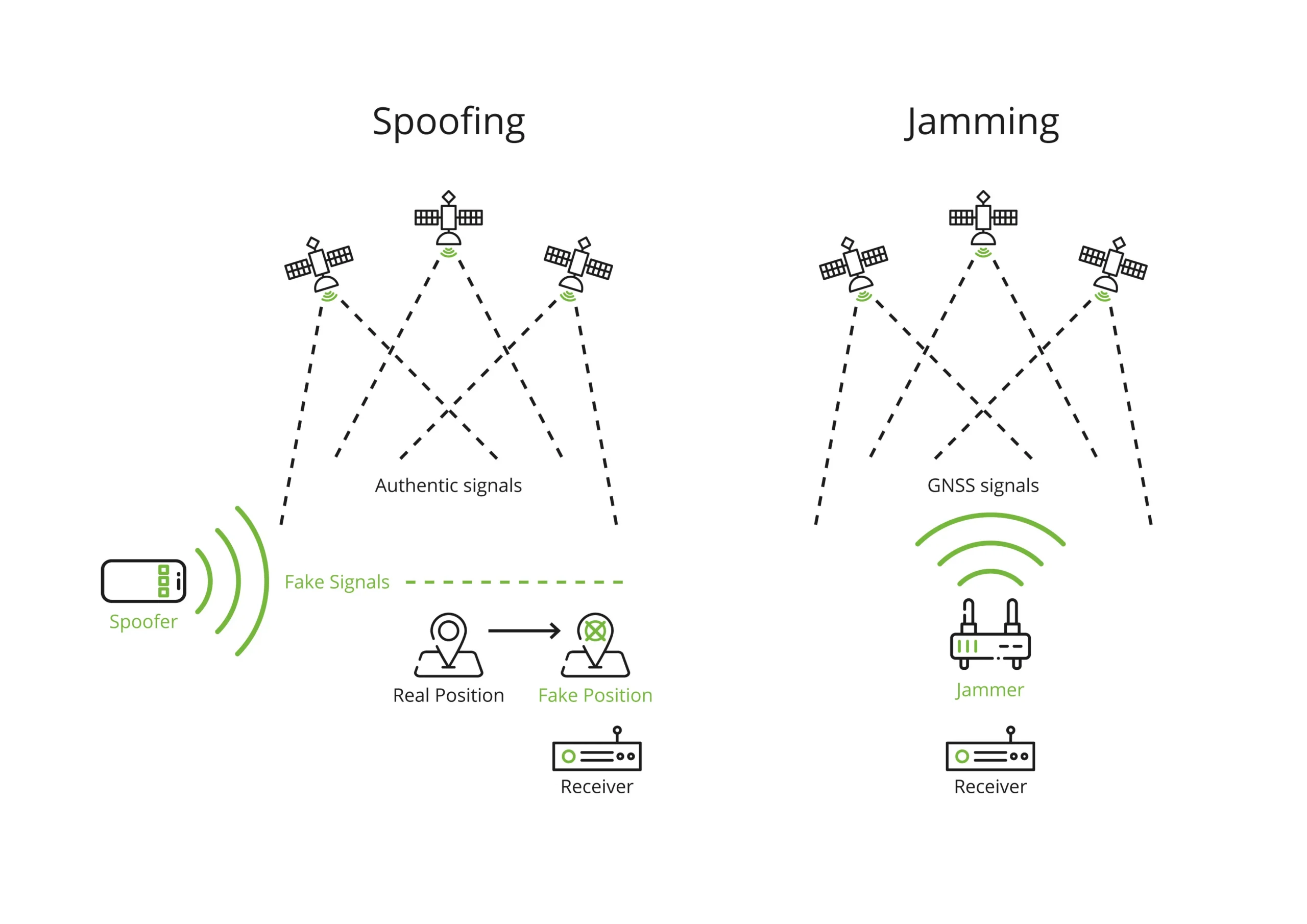
Anti-Spoofing vs Anti-Jamming: Do You Need Both?
Read More: Anti-Spoofing vs Anti-Jamming: Do You Need Both?Anti-spoofing vs anti-jamming: understand the difference and use a risk-based framework to decide whether your operation needs both forms of GNSS protection.
-

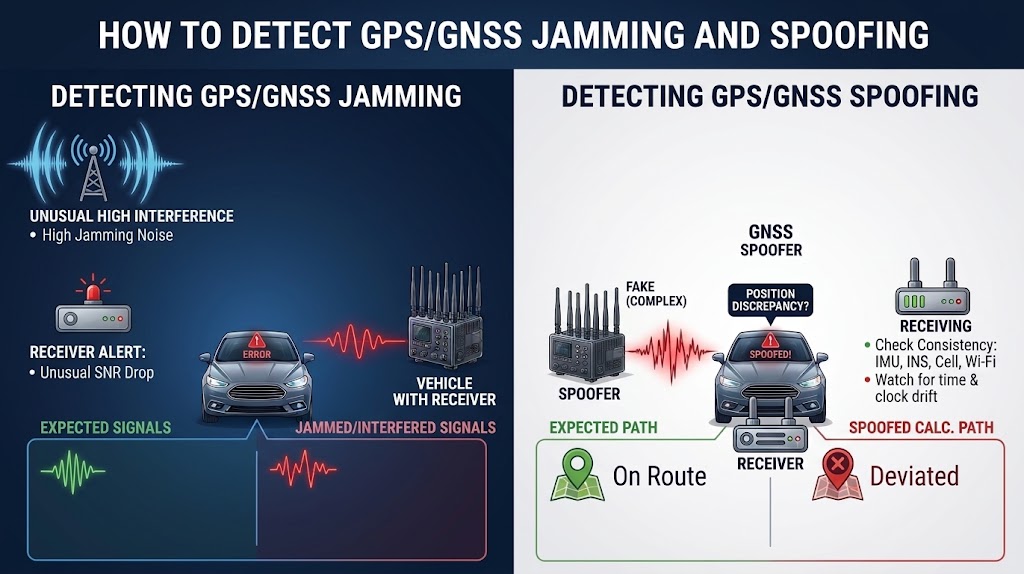
How to Detect GPS/GNSS Jamming and Spoofing
Read More: How to Detect GPS/GNSS Jamming and SpoofingLearn how to detect GPS/GNSS jamming and spoofing with C/N0 metrics, spoofing indicators, detection tools, and a monitoring architecture.
-

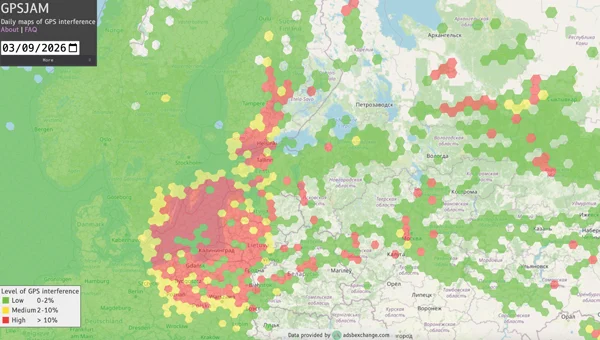
How to Read GPS Interference Maps (GPSJam & RFI Maps)
Read More: How to Read GPS Interference Maps (GPSJam & RFI Maps)GPS interference maps like GPSJam show real-world GNSS disruption. Learn how to read them, what the shades mean, and their limits for planning.