
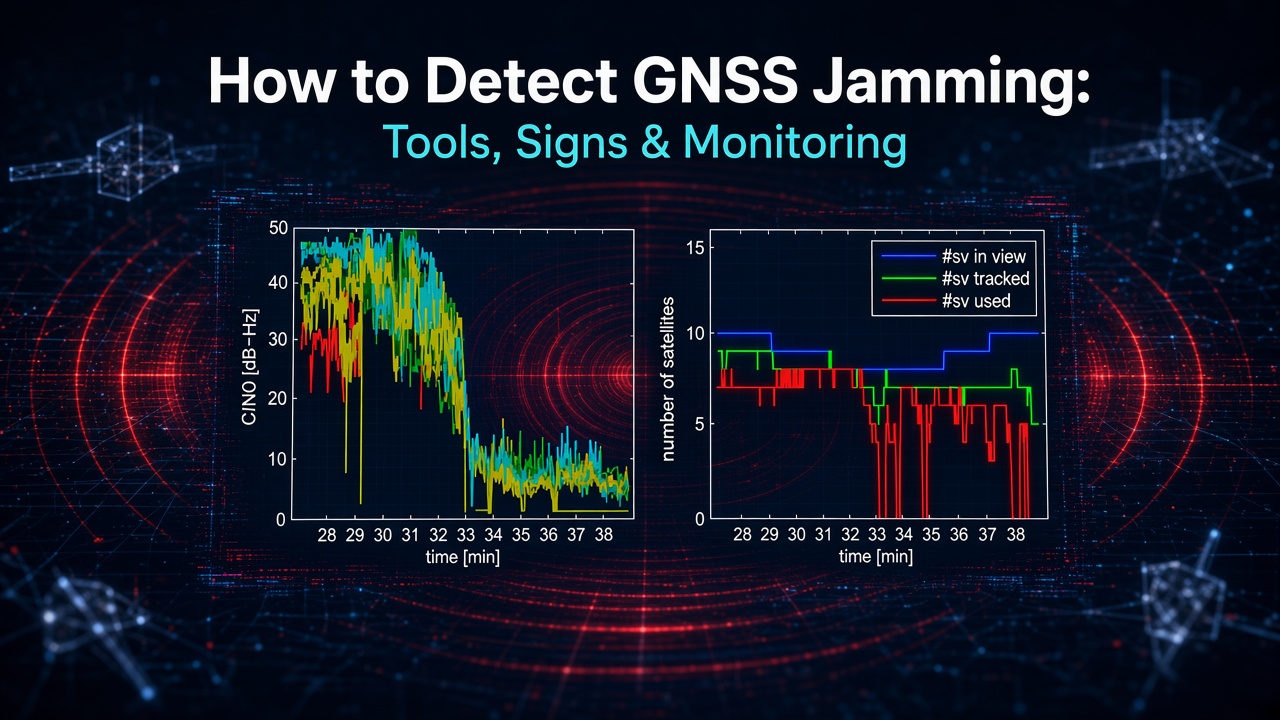
GNSS signals are extremely weak (typically below -130 dBm upon reaching the ground), making them highly susceptible to unintentional or malicious interference. Catching GNSS jamming early is the difference between a planned fallback and a lost fix. This article goes beyond the basics into practical detection tools and monitoring.
Warning signs
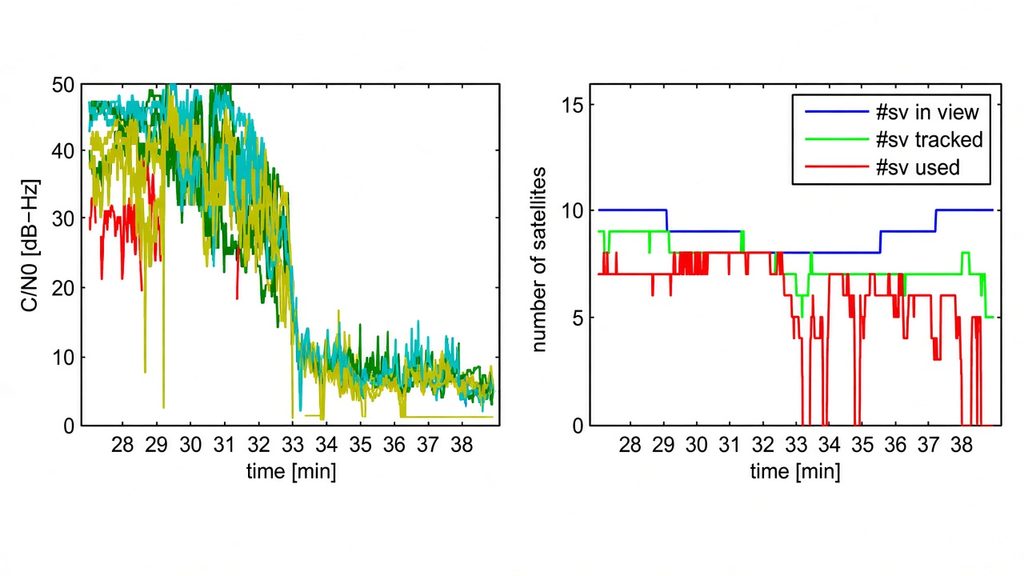
- Sudden CNR (carrier-to-noise) drop across all satellites
- Fix loss exactly when a device powers on nearby
- Position jumps or ‘float’ solutions in a fixed site
- AIS/ECDIS or cell timing alarms correlating with GNSS loss
Detection tools
Use a spectrum/anomaly monitor or a dedicated interference detector that flags CNR collapse and suspicious carriers. Pair with public interference maps to correlate regional events.
| Tool Category | Specific Equipment / Solution | Function |
|---|---|---|
| Spectrum Analyzer | Handheld (e.g., Rohde & Schwarz FPH), benchtop models | Scans L1/L2/L5/E5 bands; observes noise floor rise and abnormal signal peaks. The gold standard for on-site troubleshooting. |
| GNSS‑Dedicated Interference Monitoring Receiver | e.g., Septentrio AsteRx‑i, u‑blox NEO‑D9S, NovAtel GAJT‑700 | Built‑in interference awareness; outputs real‑time in‑band interference power, C/N₀ anomalies, and automatically flags interference types (broadband/narrowband/pulse). |
| Software‑Defined Radio (SDR) | e.g., Ettus B210, Airspy, HackRF (with GNSS‑SDR or custom scripts) | Flexible frequency‑/time‑domain analysis; captures interference waveforms for in‑depth diagnostics. |
| Antenna Array + Direction‑Finding Equipment | Interferometer or DF module within CRPA | Pinpoints the direction of the interference source to assist physical inspection. |
| Networked Monitoring System | e.g., Sentinel, GPS/GNSS interference monitoring networks (used in civil aviation or critical infrastructure) | Multi‑station TDOA positioning for regional‑scale interference source localization. |
From detection to protection
| If you see… | Action |
|---|---|
| Brief CNR dips | Log + monitor trend |
| Sustained jamming | Deploy CRPA nulling |
| Possible spoofing | Add spoofing detector |
| Recurring outages | Plan outage fallback |
Make it routine
Our how-to-detect guide and technology overview turn detection into an operating procedure. Start with the jamming vs spoofing distinction.