
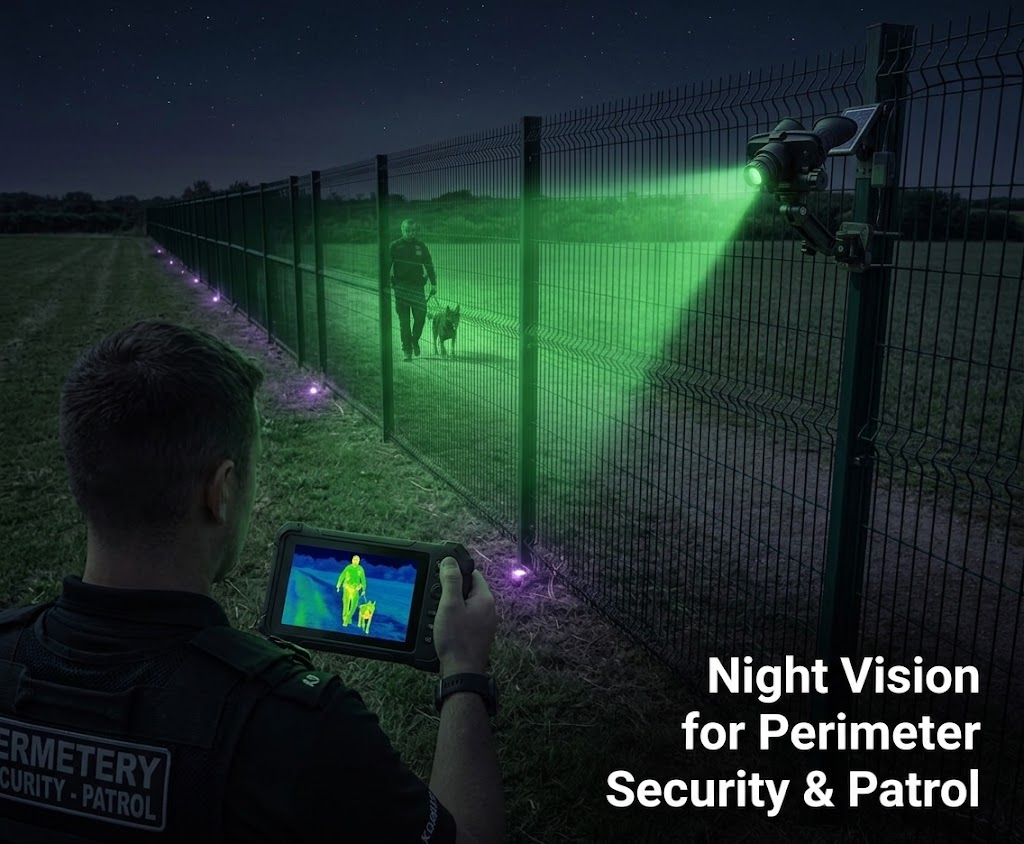
Perimeter security is about early warning. A guard on patrol or a fixed observation post needs to detect movement, confirm the threat, and respond before an intruder reaches the fence. Night vision extends that reaction window, but only if it fits the operating realities of commercial security: long shifts, mixed weather, covert observation, and minimal training time.
This guide explains how to choose and deploy night vision for perimeter patrol, with a focus on passive, full-color digital systems like the NT-C11.
Why Covert Observation Matters in Night Security
In security operations, the ability to watch without being watched is the foundation of effective deterrence and response. If a patrol guard or fixed post operator is detected before a threat is identified, the advantage shifts to the intruder. That is why the choice of night vision technology directly affects tactical outcomes.
The Hidden Cost of Active IR Illumination
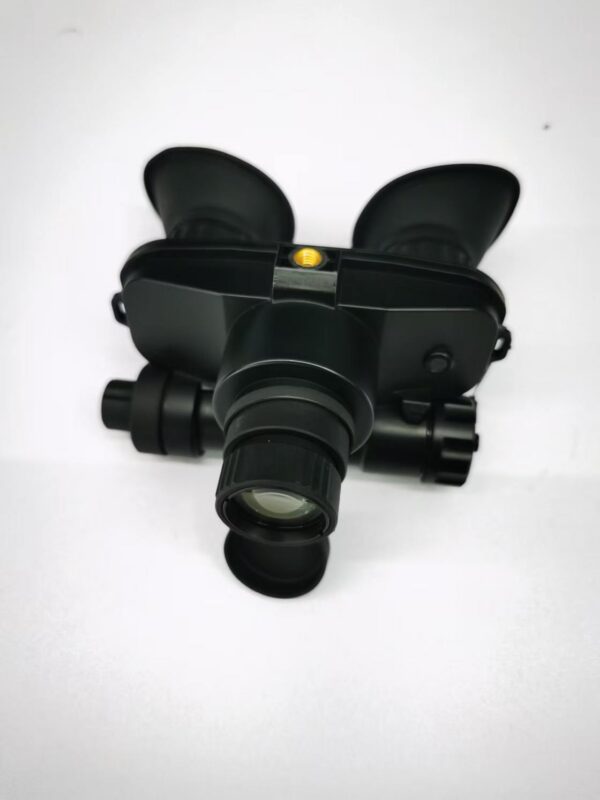
Many low‑cost night vision devices rely on an active infrared (IR) illuminator to light up the scene. While this works in total darkness, it carries three serious risks:
- Visible to other night vision users – Anyone with a comparable or more sensitive device can see the IR beam as a bright spot, revealing your position.
- Detectable by cameras and phones – Even without dedicated night vision, many consumer cameras and smartphones can pick up near‑IR as a faint purple or white glow.
- Reflection and glare – IR light reflects off windows, water, dust, and vegetation, creating haze that reduces effective image clarity.
Passive Full‑Color Night Vision: The Covert Alternative
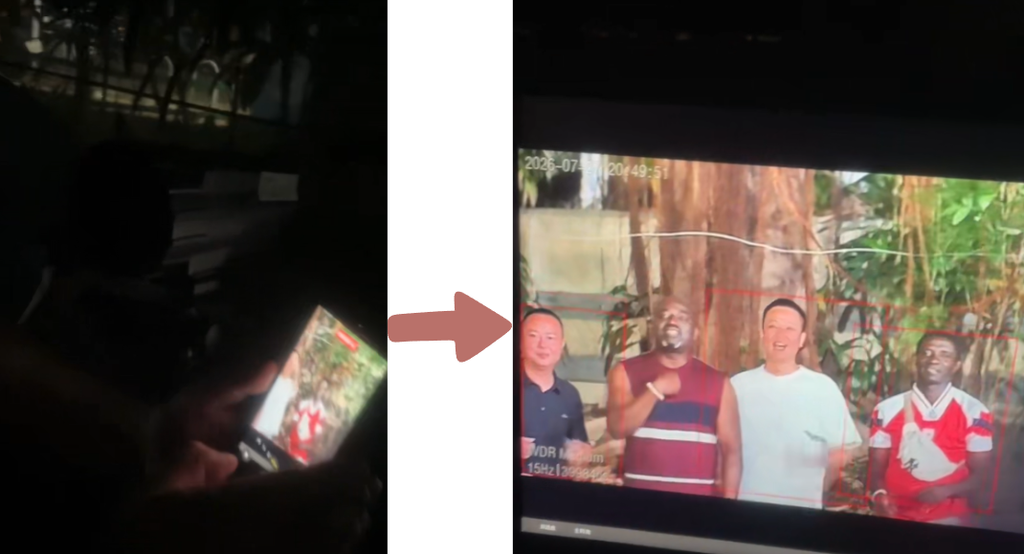
Passive devices, like the NT‑C11, use only ambient light (moonlight, starlight, or distant skyglow) to form an image. This approach offers three distinct advantages for security teams:
- Zero light signature – No emitted light means you remain invisible to all optical and IR sensors. You can observe from a concealed position without any giveaway.
- No reflection artifacts – Without an illuminator, there is no backscatter from dust, fog, or rain, so the image stays clean and usable in challenging weather.
- Full‑color situational awareness – Unlike monochrome green phosphor or grayscale thermal, full‑color night vision retains colour cues (e.g., uniform type, vehicle paint, hazard marking), which accelerates threat assessment and reduces false alarms.
The NT‑C11’s 0.001 lx minimum illumination ensures reliable performance under most outdoor conditions, from bright moonlight to overcast starlit nights.
Matching the Viewer to the Role: Patrol vs. Fixed Post vs. Rapid Response
Not all security duties have the same operational constraints. The table below translates role‑specific priorities into device selection criteria:
| Security Role | Primary Device Need | Why This Matters | NT‑C11 Match |
|---|---|---|---|
| Mobile Patrol (foot or vehicle) | Lightweight (<300 g), rugged, hands‑free capable | Long shifts require minimal fatigue; quick transitions between handheld and helmet mount. | ≤285 g, IP66, helmet‑ready – fits the bill. |
| Fixed Observation Post | Wide field of view (≥40°), high resolution, tripod mountable | Stationary scanning covers more area per sweep; good for monitoring perimeters without head movement. | 42.5° diagonal FOV, 1024×768 OLED display – excellent for broad coverage. |
| Rapid Response Team | Instant start‑up, long battery life, hot‑swap power | Every second counts; must maintain power throughout extended engagements without downtime. | <3 s cold boot, 18650 cell with ≥6 h runtime – ready when you are. |
Integration with Other Sensors – Building a Layered Security System
Night vision works best as part of a multi‑sensor ecosystem. Here is how it fits into a typical security workflow:
- Detection – A thermal camera or motion sensor picks up a heat signature or movement in a restricted zone.
2 Confirmation – The operator uses a handheld night vision viewer (like the NT‑C11) to get a detailed, colour‑accurate visual of the object – distinguishing a human from an animal, or an intruder from a legitimate worker. - Intervention – Armed with confirmed intelligence, the guard can move to investigate, relying on passive night vision to maintain the element of surprise.
This layered approach reduces false alarms, speeds decision‑making, and keeps the security team one step ahead of the threat.
The NT‑C11 Advantage – One Viewer, Three Roles
Whether you are patrolling a vast industrial site, watching from a control room, or deploying on a quick‑response call, the NT‑C11’s combination of passive full‑colour imaging, lightweight design, wide field of view, and rapid start‑up makes it a versatile tool that adapts to your mission – not the other way around.
For a closer look at how the NT‑C11 performs in your specific environment, we invite you to request a field demo or download the full specification sheet.