
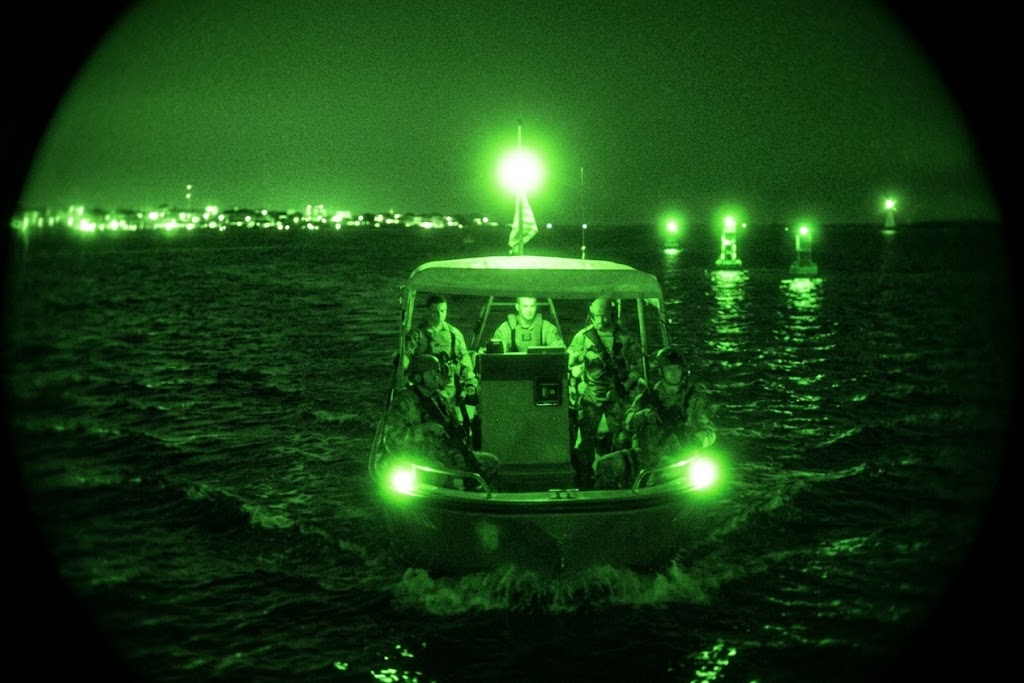
On the water at night, light behaves differently. Reflections multiply, depth perception shrinks, and the margin for error is small. A good marine night vision device does not just magnify the darkness; it preserves the color cues that help a helmsman read buoys, markers, and shoreline features.
This guide covers what makes night vision suitable for boats, yachts, and small craft, and why passive full-color imaging is particularly useful at sea. Our NT-C11 is built to the IP66 standard, making it a practical choice for wet, salty environments.
Marine Night Vision Challenges
- Glare and reflection: An IR illuminator reflects off water, spray, and glass, reducing image quality.
- Motion: A moving platform needs a high refresh rate to avoid motion sickness and blur.
- Weather: Salt spray, rain, and humidity demand sealed housings.
- Power: Standard batteries simplify inventory on a boat.
Why Full‑Color Imaging Matters at Sea (Expanded)
Maritime navigation is built on a visual language of colour. Red and green channel markers define safe lanes; yellow buoys warn of hazards; blue lights signal law enforcement; orange life jackets and white wakes mark people and vessels. A helmsman reads these cues instinctively during daylight. At night, if the night vision device strips away colour, that instinctive reading becomes a guessing game.
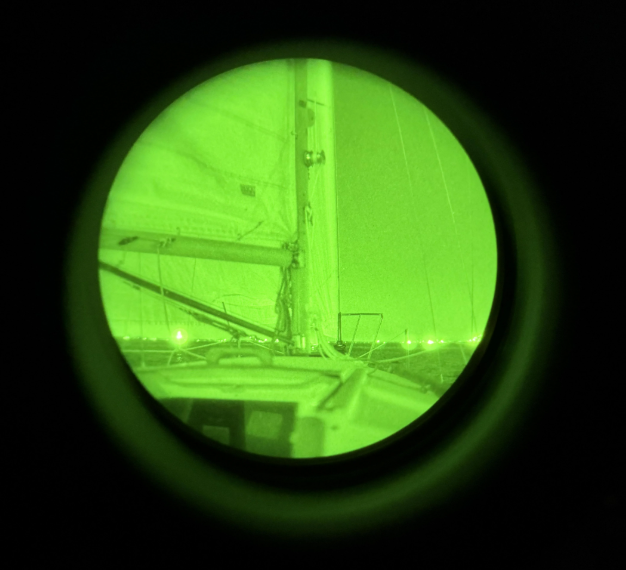
Colour is not a luxury – it’s a navigational aid. Here’s why:
- Instant identification of navigation aids – Red‑right‑returning is a universal rule. With full‑colour night vision, a watchkeeper sees the red buoy as red and the green buoy as green, just as they would in daylight. There is no need to interpret shades of grey or memorise brightness levels; the brain processes the colour instantly, reducing reaction time in narrow channels or busy harbours.
- Fast discrimination of vessels and hazards – A white navigation light on an approaching boat could be a masthead light, a stern light, or a fishing vessel’s working light – but context helps. Colour imaging preserves the subtle differences in lighting colour (warm vs cool) and distinguishes reflective surfaces. More importantly, it allows the crew to see the actual colour of hulls, decks, and equipment, making it easier to identify a fishing trawler (often with bright deck lights) from a leisure yacht or a patrol craft.
- Search and rescue at sea – When a man overboard occurs, seconds matter. An orange life jacket or a yellow survival suit stands out vividly against dark water in colour imaging, but in green‑phosphor night vision, it fades into a similar grey tone as waves or debris. Full‑colour preserves that high‑contrast orange, giving the helm a clear target to steer toward without second‑guessing.
- Reading weather and sea state – The colour of water tells a story: dark patches may indicate calm areas, while lighter streaks show wind ripples or currents. Full‑colour helps the crew assess sea conditions at a glance, which is critical for safe docking, anchoring, or navigating through shallows.
- Reducing cognitive load – Night watch is already mentally taxing. Converting colour cues into grey‑scale interpretations adds unnecessary workload. Full‑colour imaging keeps the visual interface intuitive – what you see is what you would see in daylight, just brighter. This reduces errors and fatigue during long passages.
The NT‑C11 Advantage in Marine Environments
The NT‑C11 is not just a colour camera – it’s a passive, full‑colour night vision viewer that works without an IR illuminator. That’s a crucial benefit on the water:
- No IR reflection – Infrared light bounces off spray, rain, and windows, creating blinding halos. The NT‑C11 uses ambient light only, so your view stays clear even in mist or light drizzle.
- High refresh rate for motion – The device offers up to 50 Hz refresh, which means smooth, blur‑free images even when your boat is pitching or rolling. No nausea, no lag.
- Weather‑sealed – Rated IP66, it handles salt spray, splashes, and rain without issue. The housing keeps moisture out, and the operating range (-40°C to +55°C) covers everything from Arctic waters to tropical summers.
- Standard power – It runs on a single 18650 battery – the same type used in many marine flashlights and handheld radios. You can carry spares and swap in seconds, avoiding proprietary chargers that might fail at sea.
Practical Tips for Marine Use
- Mount it or lanyard it – Keep the viewer close to the helm, either on a neck lanyard or attached to a console with a quick‑release mount. You’ll want to use it intermittently – scanning the horizon, checking markers, then lowering it to preserve natural night vision in your unaided eye.
- Use it with one eye – This is a monocular viewer, so you can keep one eye adapted to the dark. When you switch between the device and the naked eye, you retain peripheral awareness – essential for collision avoidance.
- Clean the lens carefully – Salt can scratch coatings. Use a soft cloth and fresh water rinse after each trip, following the manufacturer’s guidelines.
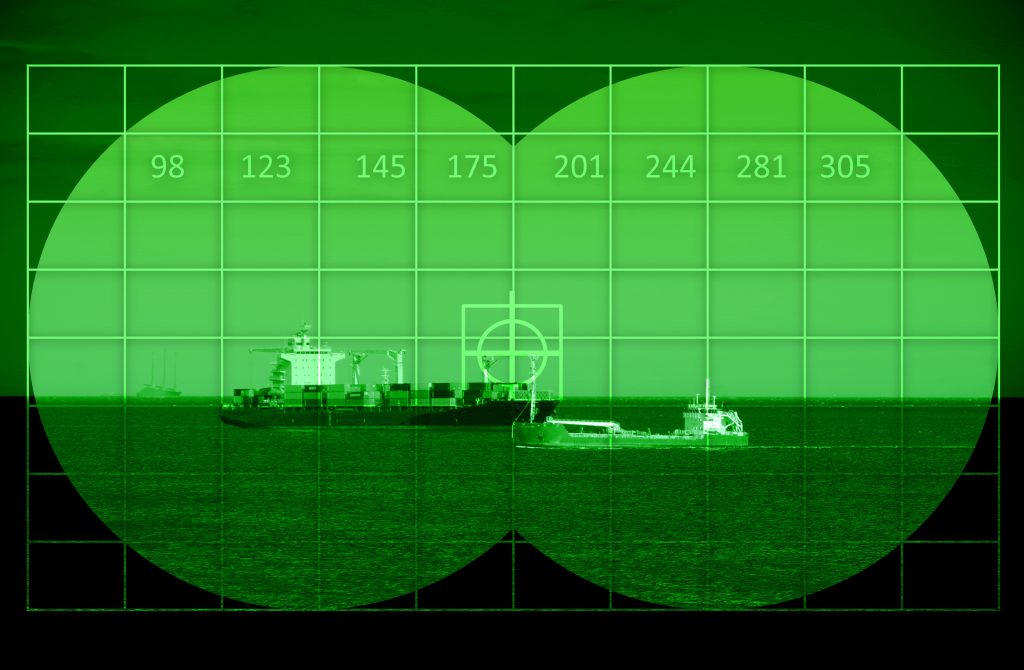
Recommended Marine NV Checklist
| Requirement | Why | NT-C11 Match |
|---|---|---|
| No IR glare | Avoid reflection off water | Passive, no illuminator |
| High refresh rate | Smooth image on moving vessel | 50 Hz |
| Sealing | Spray and rain | IP66 |
| Compact storage | Small helm space | 285 g |
Operating Tips
Use a lanyard. Store the device in a dry box when not in use. Let the lens acclimate before turning it on in humid conditions to reduce fogging. Practice identifying channel markers in daylight first so color recognition is automatic at night.
FAQ
Can night vision see through fog?
Visible-light night vision is reduced by fog, just like the human eye. Thermal is better for fog penetration.
Is night vision useful for boating?
Yes, for identifying markers, debris, other vessels, and shore features without visible light.
Does salt water damage night vision?
It can. Choose an IP66 or higher rated device and rinse it with fresh water after exposure to spray.
On the water, the difference between a nav aid and a liability is usually waterproofing and usable range. The NT-C11 is rated for marine use; fleet buyers can ask about volume pricing directly.